


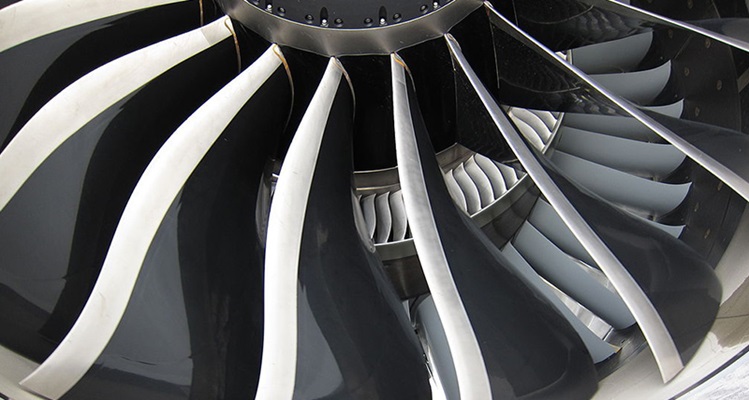
Turbine blade blending is a repair method that involves carefully hand-filing, polishing, and smoothing the unit, as well as compressor blades, with tools. This is to fix more damage, nicks, erosion, and cracks.
The goals are to eliminate stress concentrations and increase the component’s lifespan. These could propagate fractures and return the aerodynamic form. It will also endure a greater length and sustain a lesser extent if stress concentration areas are eliminated. Consequently, it is a more economical choice than replacing it.
To achieve this, turbine blade blending, progressive sanding, and polishing are used. To smooth off rough edges and restore a continuous surface by filing away damaged material. Compared to replacing entire disks or blades, this is becoming a more affordable solution.
Usually, skilled professionals perform the surgery with specific tools. Such as honing stones, files, and abrasive sheets. These are crucial for maintaining both the engine’s efficiency and airworthiness. These are used in both power-generating and aviation.
The Blending Method
- Repair: To remove any damaged regions, like a nick, file the outermost portion into a finer radius using a coarse file.
- Form Restoration: Use a file to restore the airfoil’s general shape without creating any sharp edges.
- Surface Smoothing: Use draw filing to level out the surface as well as remove the ruts as well as scars left by the initial cross-filing. This filing is aligned with the blade length.
- Finishing: To achieve a mirror-like, incredibly smooth surface free of any catches. To get rid of the file markings, use sandpaper with progressively finer grit.
Run a finger across the edge to confirm the quality. This is to ensure that it is perfect and free of defects.
Key Aspects
- Damage Mitigation: Eliminating any sharp edges and notches is the primary goal. Cracks may begin or spread there as a result of metal fatigue brought on by cyclic strain.
- Method: This is to avoid further stress spots and reduce performance loss on gas and steam turbines. Click https://www.thermopedia.com/content/1151/?tid=110&sn= for further reading.
The material can be removed manually or using specialized power instruments.
The smoothness of the modified surface is carefully ensured. And follows the initial aerodynamic profile.
- Balance Considerations: It is often necessary to rebalance the entire rotor assembly after blending. Because material removal may affect the overall balance of the turbine assembly.
- IBRs, or Integrally bladed rotors, and replacing a broken component are both economically advantageous. Blending an impaired blade is much less expensive than the entire disk.
- Aerodynamic Effects: Modifying the form may slightly change the local aerodynamics, notwithstanding its efficiency. This is taken into consideration by engineers to ensure that the changes don’t result in issues. Such as fluttering in other blades or resonant fatigue.
- Repairing Damage: This process gets rid of sharp edges and fractures. Because under stress, this can result in catastrophic collapse.
- Mechanical Steps: The damaged material is typically removed using files. The markings are then removed, and a smooth finish is achieved by using sandpaper with progressively finer grit.
- Recovering the Airfoil: The objective is to restore the blade to its initial shape without creating any new sharp edges.
- Cost-effective Solution: This method reduces expenses. It’s by avoiding the costly replacement of entire components, such as a rotor disk with integrated blades.
- Impact on Performance: Even though safety and longevity are the top concerns. Sometimes, airflow might be marginally improved with a well-blended blade. However, the main objective is to prevent failure rather than improve performance.
There is a drawback to consider. Since a significant elimination of material may somewhat influence the aerodynamics.
- On-site Service: Certain services may be combined on the spot. In other words, the part does not need to be removed from the structure.
Advantages
- Blending prolongs the component’s life and stops additional deterioration. Compared to replacement, this repair procedure is more cost-effective.
- It eliminates stress concentration spots, like as cracks, by filing as well as polishing damaged parts. This can avert catastrophic failure by preventing their growth.
- It eliminates flaws and fissures to stop additional harm. Consequently, they are prevented from spreading and further weakening the blade.
- Prolongs the life of a component by fixing damage so that it can be used again. As a result, it prolongs its useful life and postpones the requirement for a complete replacement.
- Economical Solution: Compared to replacing full components, this repair solution is more economical. This is why gas and steam turbine inspections are essential – look at this for added info.
- Restores Performance: By restoring a flat surface, the procedure aids in preserving effective airflow and performance. However, over time, material removal may result in a very slight decrease in efficiency.
- When done correctly, it satisfies OEM and safety standards. It can repair a component to either match or above the requirements set by the original equipment manufacturer.
What makes it significant?
- Safety: Removes stress sources where cracks could start and spread, potentially resulting in component failure.
- Efficiency: Assists in preserving the turbine’s desired aerodynamic performance.
- Economic: Offers an affordable alternative to replacing damaged blades. Consequently, their service life is prolonged.